
You know the feeling. You’re three drinks and two hours into a bad date, and instead of leaving, you order dessert. Not because you’re enjoying yourself. Because you’ve already sat through the small talk about his ex, and leaving now would mean the evening was wasted for nothing.
That’s not romance. That’s a cognitive bug.
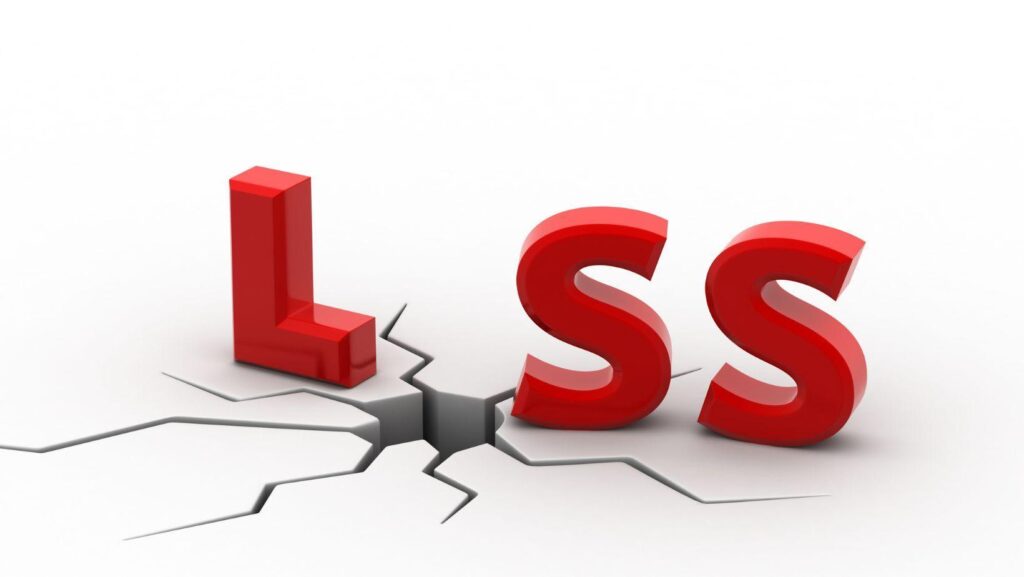
It has a name, and it comes from a place you wouldn’t expect: gambling research. Behavioral economists call it loss chasing, and it’s the exact mechanism that makes a poker player go all-in on a hand they know is weak, just to “get back” what the table already took from them. The betting industry has spent decades studying this because it’s profitable for them. It should worry the rest of us because it’s not just about money.
Sports betting apps are a clean lab for watching this play out in real time. Florida’s mobile betting market has exploded since legalization, and local coverage of the boom has been blunt about the pattern underneath it. Washington City Paper broke down how Florida bettors behave once they’re down for the night, and the pattern is depressingly consistent: a loss doesn’t trigger caution. It triggers escalation. Bigger stakes, longer sessions, worse decisions, all in pursuit of a number that already happened.
Now replace “betting app” with “situationship” and tell me that doesn’t sound familiar.
The Math Doesn’t Care About Your Feelings
Here’s the part that stings. A rational person facing a loss should ask one question: given where I am right now, what’s my best move going forward? Not: how do I get back what I already lost? Those are different questions, and most of us answer the wrong one.
Psychologists call the broader phenomenon the sunk cost fallacy, and the Cleveland Clinic has published a genuinely useful explainer on why our brains treat past investment as a reason to keep going, even when every signal says stop. Time invested. Money invested. Feelings invested. None of it is actually recoverable by staying. But it feels recoverable. That feeling is doing all the damage.
I’ve watched this in my own coaching sessions more times than I can count. A client stays in a relationship for fourteen months past the point she knew it was over, because leaving at month fourteen would mean months one through thirteen were “wasted.” They weren’t wasted before she left. They become wasted the moment she stays anyway and things get worse.
Three Places This Shows Up (Besides the Obvious One)
In dating, loss chasing looks like the fourth text after three unanswered ones. Not because the fourth text will work. Because sending it feels like doing something, and doing nothing after being ignored feels like admitting the first three didn’t matter.
In money, it looks like doubling down on a stock that’s down 40%, not because the fundamentals changed, but because selling at a loss makes the loss real. Research out of the University of Florida’s business school found that investors are measurably less likely to sell losing stocks when their whole portfolio is underwater, exactly when logic says they should be cutting exposure, not adding to it.
In friendships, it’s the group chat you keep showing up to even though it drains you every single time, because you’ve already spent six years building that friend group and walking away now feels like torching the whole investment.
Three different rooms. Same glitch running the show.
Why Your Brain Does This On Purpose
It’s not stupidity. It’s wiring. Loss aversion, the tendency to feel a loss roughly twice as intensely as an equivalent gain, is one of the most replicated findings in behavioral science. A 2023 study published in Nature’s Humanities and Social Sciences Communications used machine learning to model how consistently this asymmetry shows up across financial decision-making, and the answer was: very. This isn’t a personality flaw you can shame yourself out of. It’s a feature of how the human brain evolved to weigh risk, and it doesn’t know the difference between a blackjack table and a breakup.
Forbes ran a piece breaking down why the sunk cost fallacy specifically keeps people stuck in bad relationships, pointing to the same mechanism: the more you’ve already given, the harder it becomes to walk, even when staying costs more than leaving ever would. Read that twice. It’s not intuitive, but it’s exactly backwards from how we’d like to think we operate.
Okay, so knowing the mechanism is step one. It’s not the whole fix. But it’s the part most people skip entirely, which is why they keep landing in the same hole with a different name on it.
How to Actually Catch Yourself Mid-Chase
There’s a simple test I give clients, and it works whether the “loss” is a person, a portfolio, or a Friday night parlay. Ask: if I were meeting this exact situation for the first time today, with no history attached, would I choose it?
If the honest answer is no, the history isn’t a reason to stay. It’s the trap talking.
Psychology Today frames this as separating your decision from your history, treating every choice going forward as a fresh one instead of a continuation. Easier written than done. But naming the pattern out loud, even just to yourself, does something. It breaks the automatic pilot that keeps the chase running.
Small habit that helps: before you send the fourth text, re-up the losing position, or order the dessert you don’t want, say the sentence out loud. “I am trying to win back something that’s already gone.” Hearing it is uncomfortable. That discomfort is the point.
When the Pattern Needs More Than a Journal Entry
Some loss-chasing habits are minor and mostly harmless. You’ll survive a bad dessert order. Others compound, quietly, over years, and they’re the ones worth taking seriously rather than white-knuckling through alone. If you keep landing in the same relationship shape, or the same financial hole, or the same friend group that costs more than it gives, that’s usually not a willpower problem. It’s a pattern that formed for a reason, and patterns like that often respond better to structured support than to another self-help article.
A licensed therapist consultant can help map where the pattern actually started, which is often earlier and further from the obvious trigger than people expect. And if the loop shows up specifically in romantic relationships, working through it with a marriage or relationship coach tends to surface the sunk-cost thinking faster than trying to untangle it solo, mostly because someone outside the situation can see the pattern before you can.
The Uncomfortable Bottom Line
Chasing a loss feels like fighting. It’s actually just delay. Every extra text, every doubled-down position, every month you stay somewhere that’s already told you it’s over, is postponing a decision you’ve basically already made. The bill still comes due. It’s just bigger by the time it arrives.
If any part of this hit close to home around actual betting behavior rather than the metaphor, it’s worth naming that directly too. Gambling involves risk. Please play responsibly and only wager what you can afford to lose. If you feel gambling is becoming a problem, visit BeGambleAware.org or call 1-800-GAMBLER.
The good news is the same brain that learned to chase can learn to stop. It just needs to see the pattern clearly first, in whatever room it’s currently hiding in.
FAQ
Why do I keep going back to relationships that hurt me? Usually it’s sunk cost thinking, not love. The years already invested feel too valuable to “waste” by leaving, so staying feels like protecting an investment. In reality, staying just adds to what you eventually have to walk away from anyway.
Is loss chasing the same as being an optimist? No. Optimism expects a better outcome based on new information. Loss chasing ignores new information entirely and doubles down purely to recover what’s already gone. One looks forward. The other is stuck replaying the past.
Can therapy actually fix this pattern, or is it just personality? It’s learned behavior, not fixed personality, which means it responds to structured work. A therapist or coach can help trace where the pattern started and build a different response before the automatic “chase” reaction kicks in again.
Does this pattern show up in workplaces too? Constantly. People stay in bad jobs, failing projects, and toxic teams for the same reason they stay in bad relationships: the time already sunk feels too significant to abandon. The math rarely supports staying once you strip out the history.
How do I know if I’m chasing a loss right now? Ask whether you’d choose this situation today with zero history attached. If the honest answer is no, you’re not evaluating the present. You’re trying to win back the past, which isn’t actually possible no matter how long you stay.